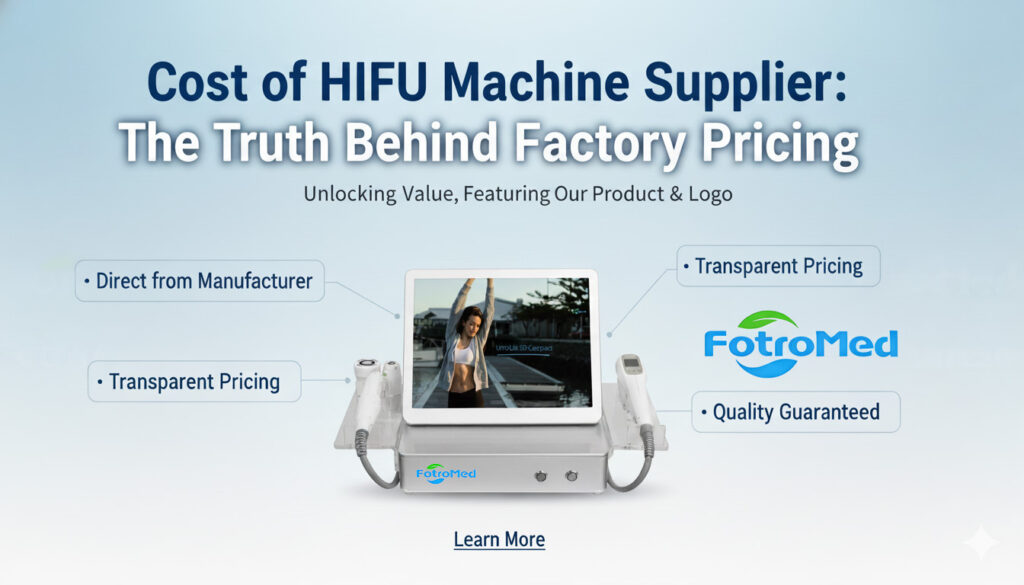
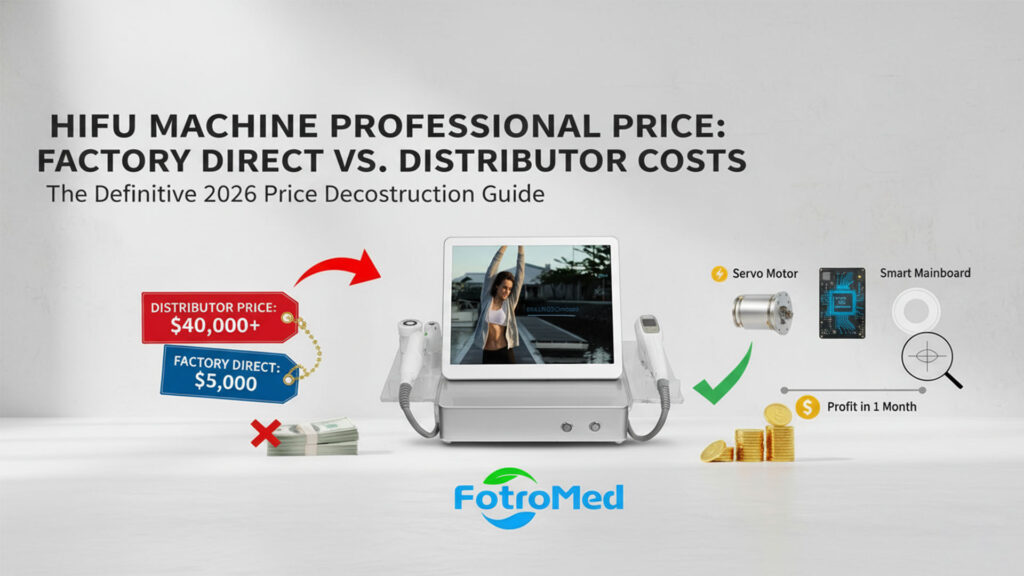
For aesthetic clinic owners in the USA, UK, Canada, and Australia, the most frustrating part of upgrading equipment is the opacity of the HIFU machine professional price. A simple Google search reveals a chaotic marketplace: dubious unbranded units on eBay for $800, standard factory-direct units for 6,000, and branded distributor units selling for $30,000 to $60,000.
Why does a machine that looks identical on the outside have a 5000% price difference? Is the expensive one truly safer? Is the cheap one a fire hazard?
This comprehensive guide serves as the definitive 2026 pricing manual. As a transparent manufacturer, Fotrohifu will deconstruct the entire cost structure of a professional High-Intensity Focused Ultrasound device. We will peel back the casing to show you the cost of Servo Motors vs. Stepper Motors, explain the “Distributor Tax” that inflates prices in Western markets, and provide detailed ROI models showing why sourcing directly from the factory is the smartest financial move for modern clinics.
The Global Pricing Spectrum: What Are You Actually Paying For?
To make an informed decision, you first need to understand the three distinct tiers of the market. Most buyers in North America and Europe confuse Tier 2 and Tier 3, often overpaying by tens of thousands of dollars.
The “Too Good To Be True” Marketplace Units ($500 – $1,500)
Found on: Alibaba (low-end sellers), eBay, Amazon.
- The Reality: These are usually “Home Use” machines disguised as professional units.
- The Hardware Cost: They utilize cheap plastic gears, low-fidelity screens, and unstable power boards.
- The Risk: Energy instability. A shot set to 1.5 Joules might output 3.0 Joules unexpectedly, leading to patient burns (“tiger striping”).
- Verdict: Suitable for personal use, legally dangerous for professional clinics.
The Professional Factory-Direct Standard ($2,500 – $8,000)
Found on: Manufacturer websites like Fotrohifu.com.
- The Reality: These are the exact same machines often sold by local distributors, just without the rebranding.
- The Hardware Cost: Built with imported motors, medical-grade mainboards, and high-capacity capacitors. The price reflects the actual manufacturing cost plus a modest factory margin.
- Verdict: The “Sweet Spot” for smart business owners. You get clinical-grade performance without the marketing markup.
The Local Distributor / Premium Brand ($15,000 – $60,000)
Found on: Local aesthetic expos in Sydney, London, or Las Vegas.
- The Reality: You are paying for the local warehouse, the sales rep’s commission (usually 10-15%), the local marketing budget, and the brand prestige.
- The Hardware Cost: Often identical to Tier 2.
- Verdict: Good for clinics that have unlimited budgets and require same-day physical service, but financially inefficient for most SMEs.
Hardware Cost Breakdown: Deconstructing the Machine
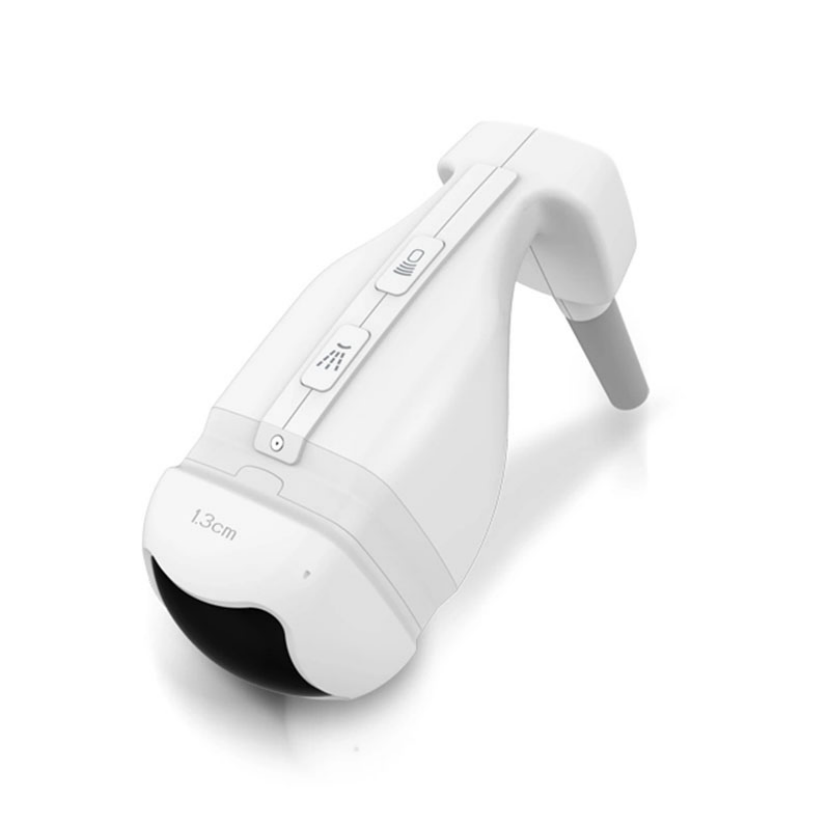
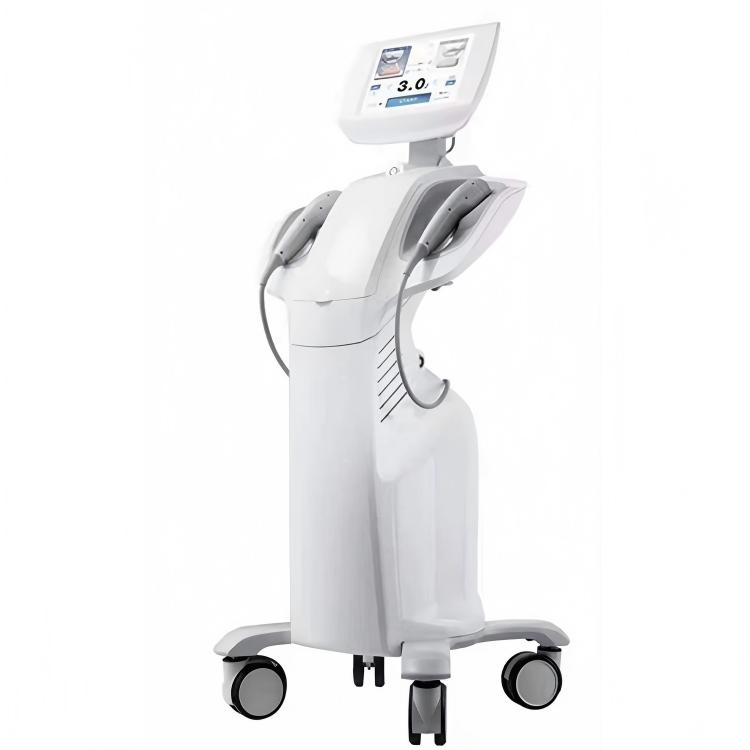
When you ask for a HIFU machine professional price, you are buying a collection of high-tech components. Let’s analyze where the money goes inside a unit like the UltraLift 7D Pro.
The Motor System: The Heart of Speed (Cost Impact: High)
The biggest difference between a cheap and a professional machine is the motor driving the transducer.
- Stepper Motors (Cheap): Used in budget machines. They move in “steps,” causing a jerky motion. This results in slow treatment times (20-30 minutes for a full face) and uneven spacing between dots.
- Magnetic Servo Motors (Professional): Used in Fotrohifu devices. These use magnetic levitation principles for frictionless, rapid movement.
- Benefit: A full face treatment takes only 10-15 minutes.
- Cost: A Servo system costs 5x-10x more than a stepper motor, justifying the higher price of professional units.
The Mainboard & Chipset: The Brain (Cost Impact: Medium)
- Generic Boards: Use basic logic. They cannot actively monitor the energy output in real-time.
- Smart Mainboards: Our machines use proprietary chips that perform “Closed-Loop Feedback.” Before every shot, the system checks the impedance of the cartridge. If it detects a fault, it stops the shot. This safety feature is mandatory for complying with regulations in Canada and the EU, adding to the production cost.
The Transducer Technology: Ceramic Quality (Cost Impact: Medium)
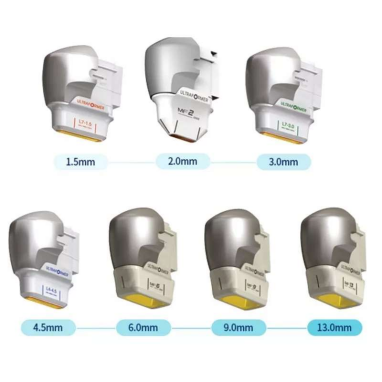
The piezoelectric ceramic inside the cartridge determines the focus quality.
- Low-Grade Ceramic: The focal point is messy and large (like a splash). This causes pain.
- High-Grade Imported Ceramic: Creates a tight, precise focal point (like a needle tip). This maximizes the lifting effect while minimizing pain. This is why clients prefer treatments from machines like the UltraLift 7D Pro compared to older technology.
The Chassis & EMC Shielding
For a machine to be imported into the USA (FDA) or Europe (CE), it must pass Electromagnetic Compatibility (EMC) tests.
- Cheap plastic casings leak electromagnetic noise, interfering with other devices.
- Fotrohifu uses shielded metal chassis construction. This increases the weight and material cost but ensures regulatory compliance and durability.
The Supply Chain Math: Where Your Money Goes
Why does a machine costing $4,000 at the factory sell for $25,000 in California? Let’s look at the “Distributor Math.”
Table: Price Buildup from Factory to Local Showroom
| Cost Stage | Factory Direct (You buy from Fotrohifu) | Local Distributor Model (You buy locally) |
| Manufacturing Cost | $2,XXX | $2,XXX |
| Factory Margin | + $1,XXX | + $1,XXX |
| Intl. Shipping | + $300 – $800 | + $300 (Bulk rate) |
| Import Duties | + $XXX (You pay customs) | + $XXX |
| Distributor Warehousing | $0 | + $2,000 (Overhead) |
| Sales Rep Commission | $0 | + $3,000 (15% Comm) |
| Marketing/Expos | $0 | + $5,000 (Branding) |
| Distributor Profit | $0 | + $10,000+ |
| FINAL PRICE | ~$3,500 – $6,000 | $25,000 – $45,000 |
Key Insight: When you buy locally in the UK or Australia, approximately 70-80% of your money is paying for the distributor’s business expenses, not the machine’s quality.
Hidden Costs: Total Cost of Ownership (TCO)
The initial HIFU machine professional price is only the entry ticket. The real financial drain is the “Running Cost” – specifically, the cartridges.
The “Printer Ink” Business Model
Many distributors sell machines cheaply but lock you into proprietary cartridges that cost $1,000 each.
- Scenario A (Distributor Machine): Cartridge costs $1,000 for 10,000 shots.
- Cost per shot: $0.10
- Cost for Full Face (600 shots): $60.00
- Scenario B (Fotrohifu Factory Direct): High-capacity cartridge costs a fraction of the distributor price (wholesale rate).
- Cost per shot: ~$0.01 – $0.02
- Cost for Full Face (600 shots): ~$10.00
Profit Impact: Over 100 clients, Scenario B saves you $5,000 in pure profit. This is why checking the consumable price is as important as checking the machine price. Always ask about our bulk cartridge pricing when requesting a quote.
Regional Analysis: Importing to Your Country
Clients in Western markets often worry that importing is difficult. In 2025, logistics are streamlined.
Buying from the USA & Canada
- Customs: The HS Code for aesthetic devices is generally straightforward.
- Voltage: All Fotrohifu machines (including the UltraLift SD Compact) are dual-voltage (110V/220V). We ship with US-standard plugs.
- Shipping: We use DHL/FedEx Express. Delivery to New York, Los Angeles, or Toronto typically takes 5-8 days.
Buying from the UK & Europe
- VAT: Be aware that you will need to pay VAT (e.g., 20% in the UK) upon arrival. However, even with VAT added to the factory price, the total is still usually 50% cheaper than buying from a London supplier.
- CE Mark: Our machines are manufactured according to strict safety standards suitable for the European market.
Buying from Australia & New Zealand
- GST: Similar to Europe, GST applies.
- Distance: Despite the distance, air freight to Sydney or Auckland is fast and reliable. Many mobile clinics in Australia prefer our portable units to save on shipping volume weight.
Choosing the Right Model for Your Budget
We offer tiered pricing to suit different business stages.
The “Budget-Friendly” Entry: UltraLift SD Compact
- Who is it for? Startups, Home-based salons, Mobile Estheticians.
- Why the price is lower: It removes the expensive vertical chassis and heavy touchscreen assembly. It packs the same professional engine into a desktop box.
- ROI Speed: Extremely fast. With low overhead, you can break even with just 5-8 clients.
The “Clinic Standard”: UltraLift 7D Pro
- Who is it for? Established clinics, Dermatologists, High-traffic Spas.
- Why the price is higher: Dual Engines (treats 2x faster), larger touch screen, active water cooling for 24/7 operation.
- Value: Time is money. If you charge $1,000 per hour, saving 20 minutes per client adds massive revenue potential.
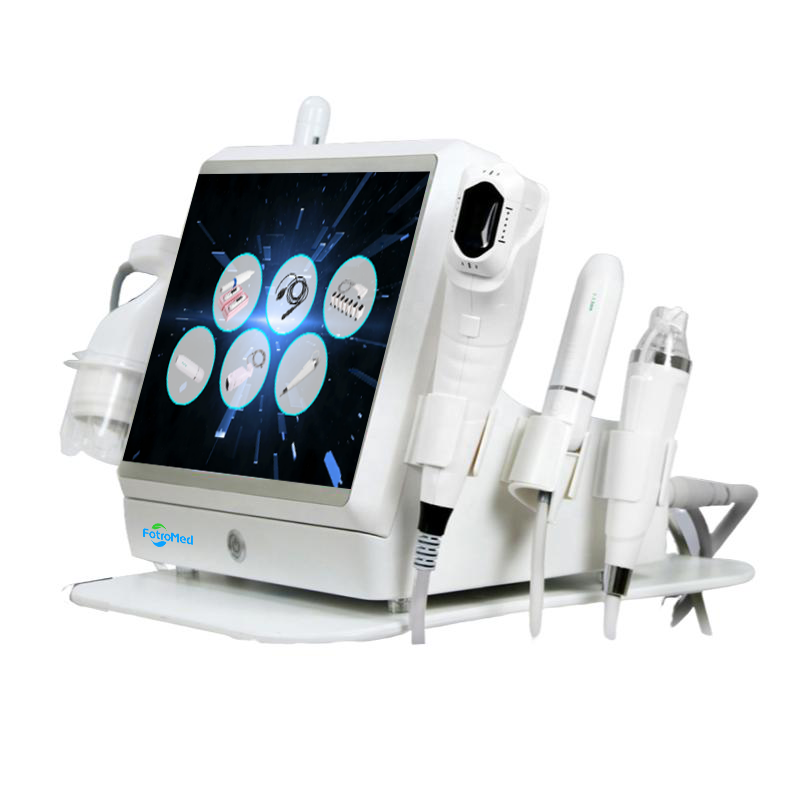
The “Platform” Investment: FotroHIFU Max
- Who is it for? Med-Spas wanting a full menu.
- Value: Instead of buying a separate Liposonix machine, a separate Facial HIFU, and a separate V-Max, you buy one unit. This saves floor space and maintenance costs.
ROI Calculator: When Do You Break Even?
Let’s look at a realistic Return on Investment model for a clinic in the USA purchasing a factory-direct unit.
Assumptions:
- Treatment Price: $800 (Low average for Full Face)
- Clients Per Week: 3 (Very conservative)
- Consumable Cost: $15 per treatment
Table: Profit Projection (Year 1)
| Month | Revenue (12 clients/mo) | Cumulative Revenue | Machine Cost Covered? |
| Month 1 | $9,600 | $9,600 | YES (Likely Profit already) |
| Month 2 | $9,600 | $19,200 | Pure Profit |
| Month 6 | $9,600 | $57,600 | Growth Stage |
| Month 12 | $9,600 | $115,200 | High Margin Success |
Comparison: If you bought a $40,000 machine from a local distributor, you would still be paying off the machine debt in Month 5. With Fotrohifu, you are profitable in Month 1 or 2.
FAQ:
Q1: What is the typical HIFU machine price in USA for a professional grade unit?
If buying from a US distributor, expect to pay between $15,000 USD to $45,000 USD depending on the brand. However, if you purchase the same spec machine directly from our factory, the landed cost (including shipping and duties) is often under $6,000 – $8,000 USD.
Q2: Are there extra taxes when shipping HIFU machines to Canada?
Yes, Canadian buyers typically pay GST/HST and potential import duties upon arrival. Even with these taxes, the total cost is significantly lower than buying from a Toronto-based reseller. We can help estimate these costs for you before you order.
Q3: Does the professional price include training and certification?
At Fotrohifu, yes. Unlike some cheap sellers who just ship a box, our professional price includes access to video training, user manuals, and treatment parameter guides. While we are a manufacturer and not a beauty school, our materials help your staff get certified and confident.
Q4: Can I finance the machine if I am in Australia or UK?
Direct factory purchases are usually paid via T/T (Bank Transfer) or Credit Card/PayPal upfront. We do not offer financing plans like local distributors. However, the significantly lower upfront cost often means financing is not necessary, or you can use a local small business loan which is cheaper than distributor financing rates.
Q5: What is the price difference between 4D and 7D HIFU machines?
Generally, 7D machines are 20-30% more expensive than older 4D models. This is due to the more expensive dual-engine technology and specialized micro-focus cartridges. However, the 7D offers faster treatment times and less pain, which allows you to charge higher prices to your clients, offering a better ROI.