
OEM & ODM Solutions for Your Brand
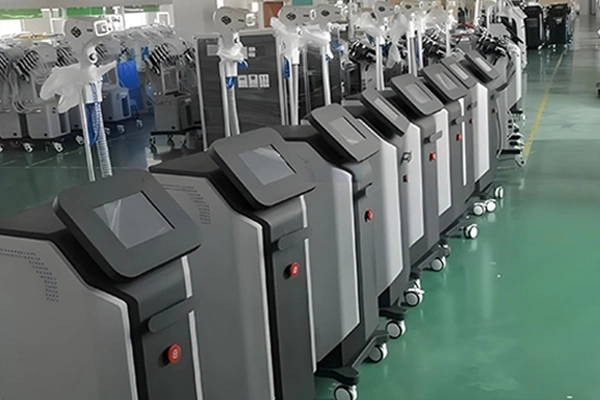
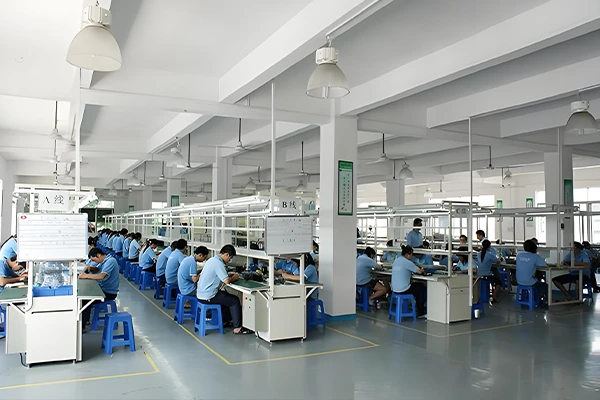
FotroHIFU has supported 1,500+ clients with customized aesthetic equipment solutions. Backed by a 3,000 m² factory, an ISO 13485-certified quality system and a core team averaging 20+ years of experience, we support HIFU projects from private labeling to full product development through a defined engineering and testing process. This reduces project risk and shortens implementation time: distributors can build a more differentiated product line, while clinics and medspas receive a HIFU system better suited to their treatment menu, workflow and brand positioning.
Find the Right HIFU Machine OEM & ODM Solution
From brand customization to product redesign, choose the level that fits your market, timeline, and order volume.
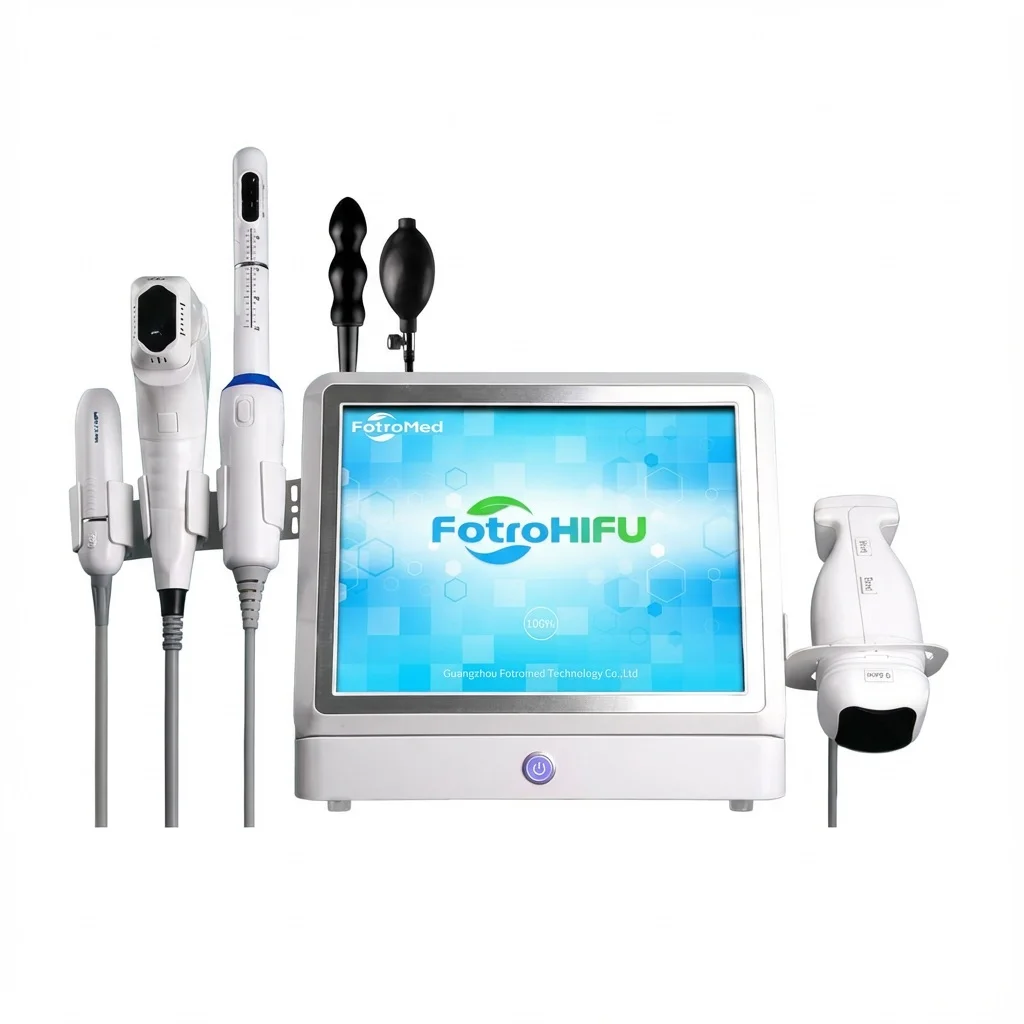 Startup screen
Logo area
Startup screen
Logo area
Brand launch
Keep the established platform and add clear brand identification to the areas customers see.
- Logo, product name, model name, nameplate, and serial label
- Startup screen, basic interface branding, and supported local languages
- Existing color, trim, and panel combinations without new tooling
- Carton labels, manual cover, and basic sales materials
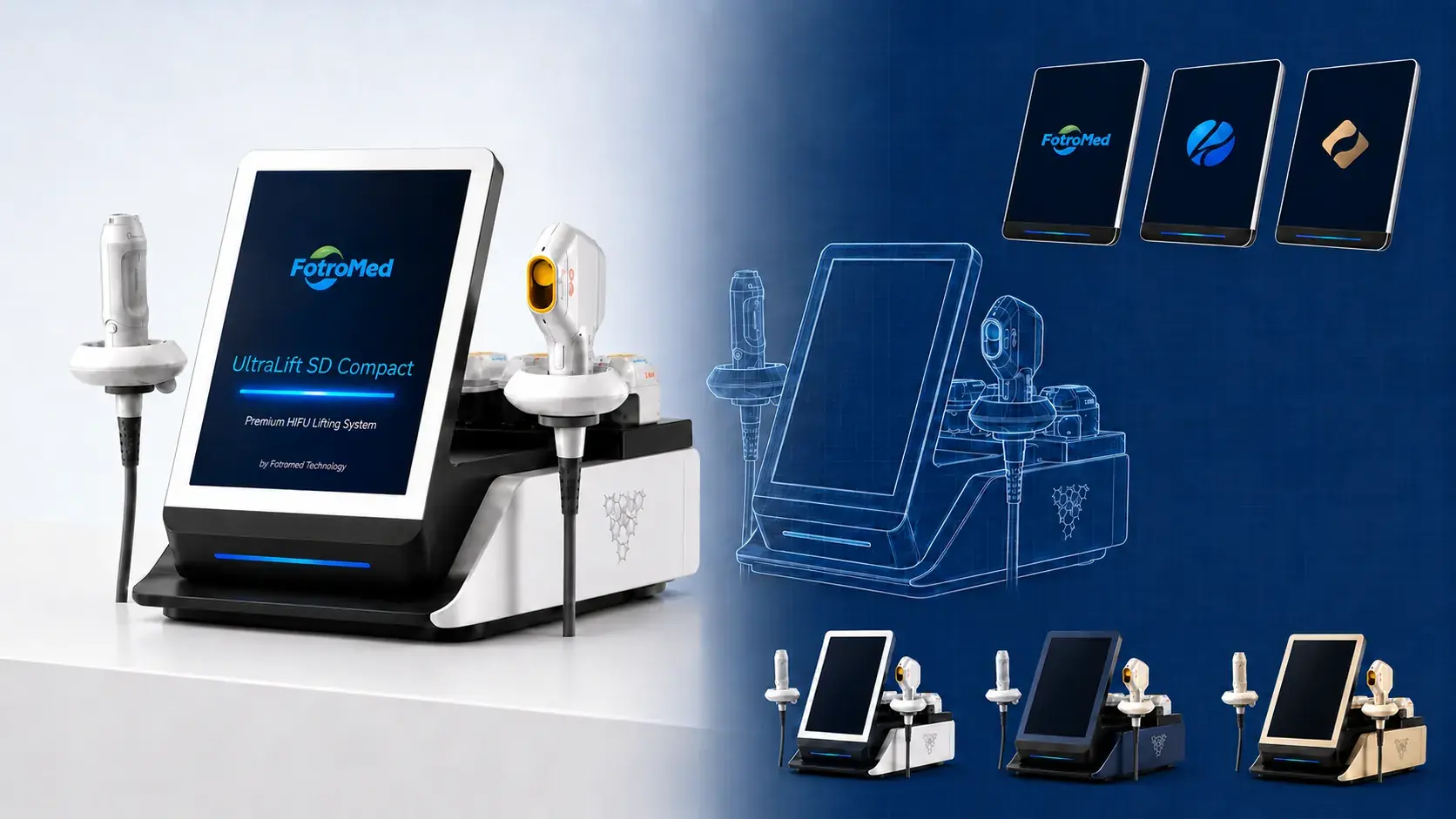 Brand packaging
Private-label system
Coordinate the machine, interface, manual, packaging, training, and sales materials as one brand system.
- Brand theme, interface layout, startup screen, and reviewed local terminology
- Selected colors, surface finishes, trim, and accessory presentation
- Branded training material, treatment menu, and launch assets
- One approved version for artwork, interface text, labels, packaging, and configuration
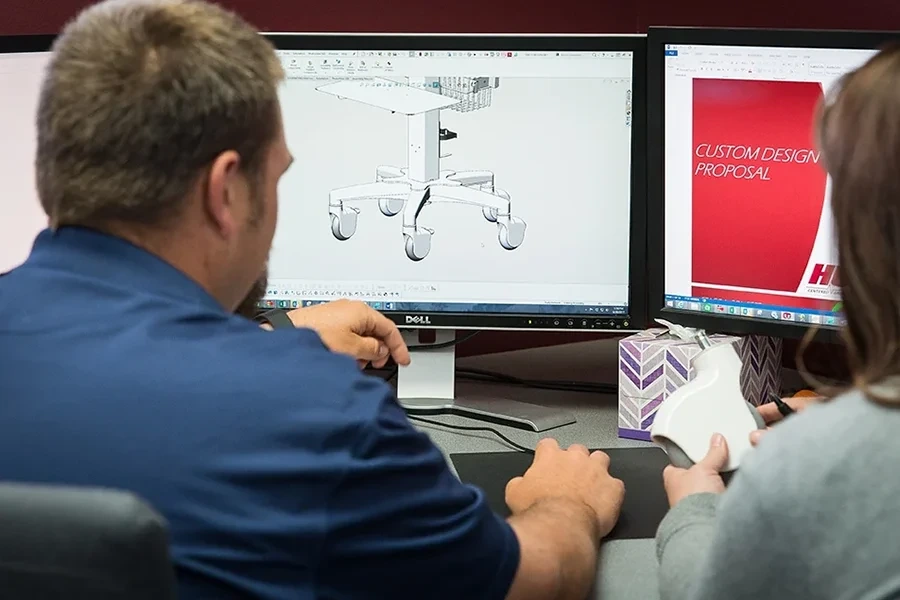 Design direction
ODM development
Develop a differentiated product through feasible industrial design, structural, accessory, and software work.
- Enclosure, screen frame, handpiece holder, caster, cooling, and component layout
- New material strategy, dedicated handpieces, or accessory systems
- Feasible interface flow, operating logic, and software functions
- Prototype, tooling, pilot production, validation, and packaging engineering
Keep the established platform when speed is the priority. Move into deeper development only when market needs, compliance planning, annual volume, and product differentiation justify the added engineering work.
Compare the three customization levels.
The same request can involve a different depth at each level. Final feasibility depends on the equipment platform, current software version, and review of compliance impact.
| Customization item | LEVEL 1 | LEVEL 2 | LEVEL 3 |
|---|---|---|---|
| Device logo / product name | Included | Included | Included |
| Nameplate / serial label | Included | Included | Included |
| Startup screen | Basic branding | Complete brand theme | Custom operating flow |
| Local language | When supported by current software | Full terminology review | Custom software scope |
| Enclosure color / trim | Existing options | Specified colors and finishes | New design and tooling |
| Packaging / manual | Basic branding | Complete private label | Engineered packaging system |
| Sales materials | Basic materials | Branded sales kit | Complete launch system |
| Training materials | Standard content with logo | Branded training content | Custom workflow system |
| Handpiece / holder layout | Unchanged | Selected adjustments | Engineering redesign |
| Internal configuration | Unchanged | Controlled options | Project engineering |
| Technical documents | Existing platform scope | Review against final model | Dedicated document path |
| Compliance impact review | Basic check | Configuration freeze | Formal change control |
Important: Existing reports do not automatically cover every customized result. Changes to electrical parts, software safety logic, structure, power supply, handpieces, or intended use may require additional assessment or third-party testing.
Prepare a project brief that supports a useful quote.
Explain the product, market, regulatory path, and commercial target first. This allows Fotromed to separate platform-based work that can be quoted directly from projects that require an NDA, engineering review, or additional testing.
Provide these eight items
Project starting point- 01 Target equipment platform, functions, or treatment menu
- 02 Target country, intended use, and compliance path
- 03 Preferred customization level and detailed scope
- 04 Logo, brand guidelines, and authorization to use the supplied assets
- 05 Prototype quantity, first order quantity, and estimated annual volume
- 06 Target cost and market positioning
- 07 Preferred launch date and approval milestones
- 08 NDA, regulatory responsibility, and document ownership for ODM work
Confirm eight checkpoints before mass production.
Each checkpoint has a defined input and output. The selected level determines the depth of prototype, engineering, and validation work.
Project brief
Confirm the market, users, functions, brand, target cost, and estimated volume.
Feasibility review
Review technical scope, manufacturing risk, compliance impact, and platform feasibility.
Quote and timeline
Define MOQ, engineering or tooling fees, prototype work, and production planning for the confirmed scope.
Design approval
Confirm the logo, color, interface, language, labels, packaging, and hardware configuration.
Reference sample
Produce a standard prototype or customized reference sample for approval.
Validation
Check function, stability, appearance, assembly, packaging, and agreed compliance items.
Production
Control materials, assembly, quality checks, and serial records against the frozen configuration.
Delivery support
Prepare inspection records, manuals, packing lists, logistics information, and agreed handover support.
Freeze the configuration, artwork, and reference sample before mass production.
The approval record becomes the common reference for production inspection and repeat orders. Level 2 and Level 3 projects should begin mass production only after approval of the physical sample or the agreed photo and video package.
Keep the device and documents on the same approved version.
Customization is not an informal change after order confirmation. The approved artwork, reference sample, configuration, and documents form the production and inspection standard.
Match documents to the final model
Reports, declarations, nameplates, labels, and manuals must match the final model and configuration. A document for a similar platform cannot replace review of the finished product.
Use the reference sample as the production standard
Freeze the appearance, color, interface text, labels, packaging, and hardware configuration before production. Keep the approval record as the reference for production and repeat orders.
Maintain assembly and inspection traceability
Move customized devices through material control, assembly, function checks, and serial recording against the approved configuration. Define the deliverable records in the project scope.
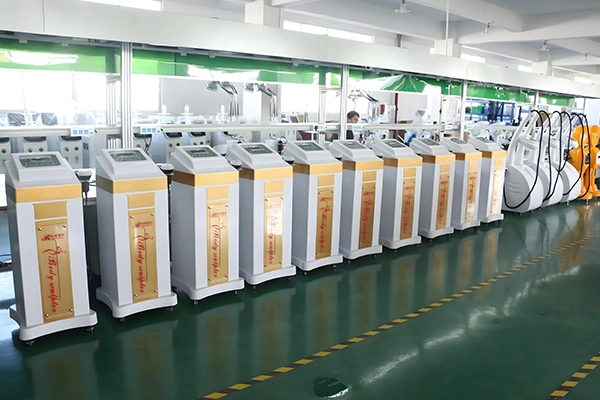
Customize the brand without blurring responsibility.
Deeper customization requires clearer responsibility for trademark use, regulatory work, legal manufacturer status, document ownership, and change approval.
- The buyer must own or have permission to use supplied trademarks, logos, artwork, and other brand assets.
- Changes to electrical systems, structure, software safety, or intended use require formal change review.
- Regulatory responsibility, legal manufacturer status, and technical document ownership must be agreed in writing before deep customization begins.
- Customization does not provide automatic market access or replace the target market’s compliance work.
FAQ
What is the difference between the three customization levels?
Use three levels. Level 1 adds the logo, product name, startup screen, supported languages, and basic packaging to an established platform. Level 2 coordinates the device, interface, packaging, training, and sales materials as one private-label system. Level 3 adds industrial design, structure, accessories, or software work and requires engineering, compliance, and production feasibility review.
Can we start from an existing HIFU platform?
Yes. Start with one existing HIFU platform, then confirm four items: the target model, current production version, target market, and requested changes. Level 1 or Level 2 keeps more of the established platform. Level 3 moves into engineering work only after the requested structural, accessory, or software changes pass feasibility review.
What information should we provide for a quote?
Provide eight inputs: target platform or treatment menu, launch market and compliance path, customization level, approved brand assets, prototype and order quantities, target cost, launch date, and ODM responsibility boundaries. Also confirm voltage, plug, and packaging requirements. This separates a direct platform quote from work that needs engineering or testing review.
Can structural or software changes require additional testing?
Yes. Four change areas can trigger extra review: structure, electrical logic, software safety logic, and intended use. Any one of them may change the testing or document path. Fotromed should confirm the final model, exact change, target market, and required evidence before placing the item into the formal quote.
What is reference sample approval?
Reference sample approval freezes one production standard: either the physical sample or an agreed photo and video package. It records the final configuration, artwork, appearance, labels, and packaging. Level 2 and Level 3 projects should not enter mass production until this standard is approved and retained for inspection and repeat orders.
How long does preparation take for a standard or customized HIFU machine?
Standard machines have a reference lead time of 30 to 60 days. The final schedule depends on the model, configuration, quantity, logo, packaging, target-market documents, and testing path. For OEM or ODM work, Fotromed confirms MOQ, engineering or tooling fees, prototype work, and production timing in the formal quote after scope review.
Who confirms the compliance documents for the target market?
Confirm four identifiers for every document: final model, document holder, target market, and validity. Then list who owns the regulatory work, legal manufacturer role, and technical files. The formal quote and final document list should record each party’s responsibility. A certificate for a similar platform does not automatically cover the customized product.