

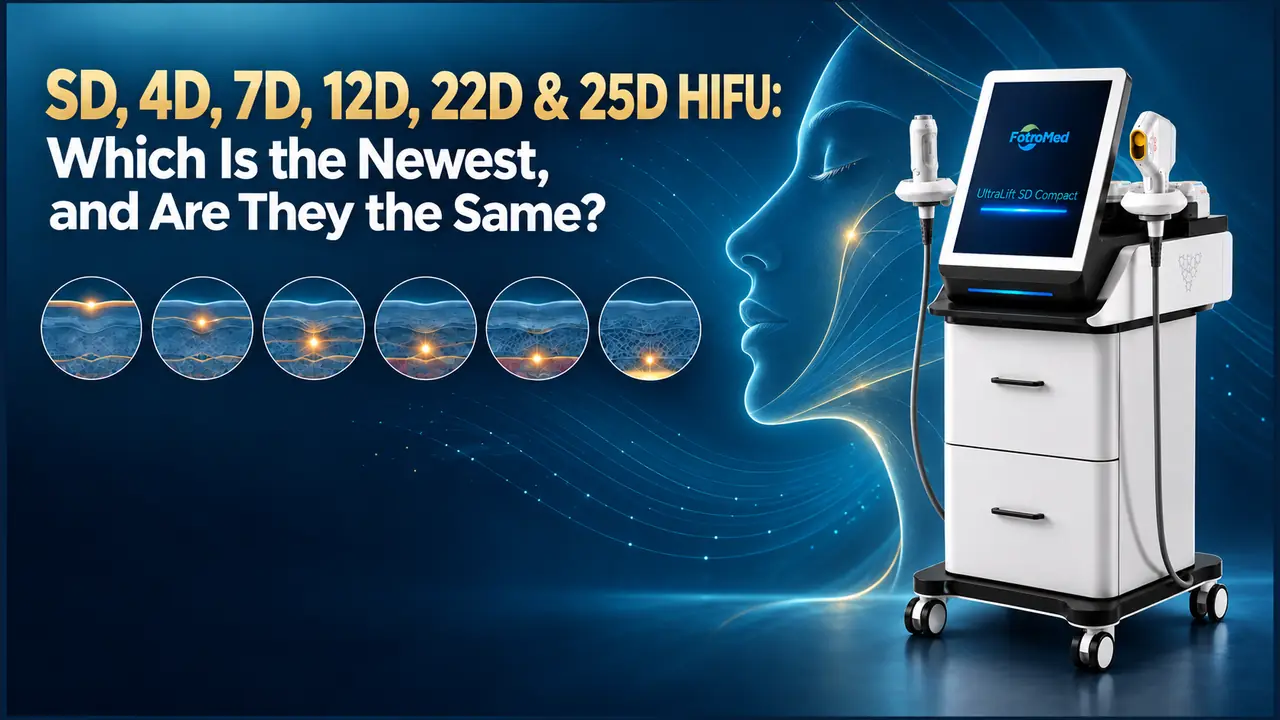
If you run an aesthetic clinic in Dubai, UAE, and want to upgrade your HIFU equipment, your first message to a supplier might be: “I’m looking for a 25D HIFU machine.” You want more advanced technology, more efficient treatments, and a more comfortable experience for your clients. Then the quotations arrive. One supplier recommends 25D, another says 7D covers your treatment menu, and a third suggests SD. Where should you put your budget, and which technical differences are worth upgrading for?
The answer starts with separating the name from the configuration. Manufacturers choose their own D labels, with no shared rule connecting the number to handpiece count or technology. When you search for the “latest HIFU,” the useful questions are what technology the machine uses, what it changes compared with your current equipment, and how those changes support your treatments and client experience.
This guide explains what SD, 4D, 7D, 12D, 22D, and 25D refer to in specific products, then compares six FotroHIFU systems by technology, handpieces, depth options, and service range. You will be able to separate naming differences from equipment differences, identify functions you will use, and recognize which performance claims need evidence before comparing supplier quotations.
What do SD, 4D, 7D, 12D, 22D, and 25D mean on the market?
D labels follow each manufacturer’s own naming system. Comparing 7D, 12D, and 25D across suppliers gives you no shared technical scale for judging the equipment. Two 7D machines can have different technologies and configurations, while differently named machines can offer similar functions. A useful comparison starts with each machine’s technology, handpieces, cartridges, and delivery modes, then matches those details to your planned services. The six FotroHIFU products below show how to compare actual configurations beyond the D labels.
SD focuses on speed and comfort
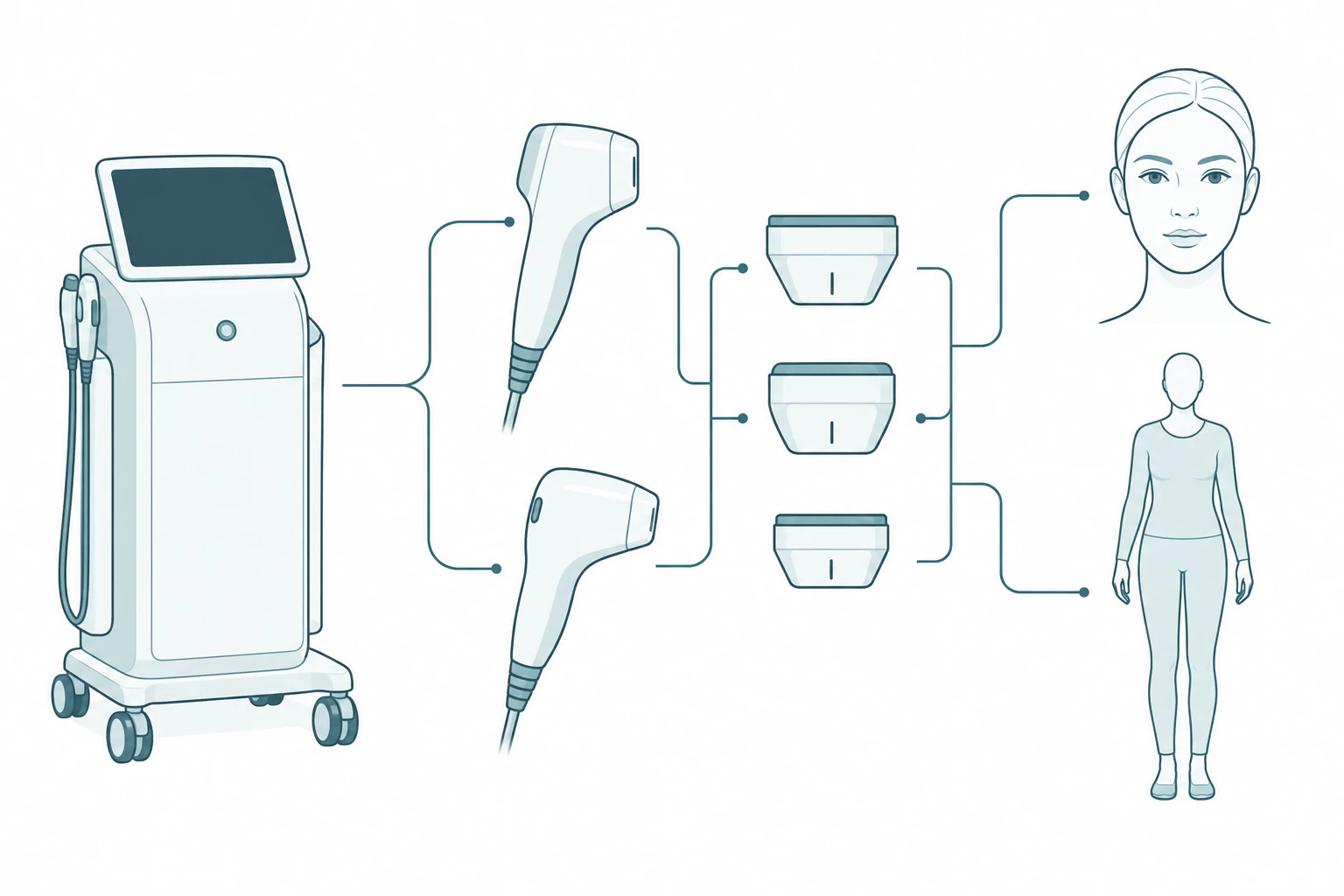
UltraLift SD Compact is positioned around treatment speed and low perceived discomfort, giving buyers focused on efficiency and client experience a reason to consider it. SD means Synergy Dotting: the SD handpiece delivers dot-mode MFU with 2MHz bipolar RF, while the FL handpiece provides linear MFU. Cartridge options for both handpieces cover 1.5mm to 9.0mm. The compact format also makes space part of the purchasing discussion. To assess the speed and comfort positioning, request a demonstration for your planned services and review the complete workflow and settings.
4D supports multi-line delivery and add-ons
FotroHIFU Max uses multi-line HIFU delivery with up to 12 treatment lines per shot; 4D is the series name used for this product. The standard configuration provides a 4D HIFU handpiece and three cartridges. VMAX HIFU, RF microneedling, Lipo HIFU, and intimate-care handpieces can be added when the treatment menu calls for them. Start with the services the clinic plans to offer, then choose the optional handpieces that support them.
7D covers facial and body applications
UltraLift 7D Pro has seven cartridge depths: 1.5, 2.0, 3.0, 4.5, 6.0, 9.0, and 13.0mm. Its MMFU platform combines micro and macro focused ultrasound. The 2.0mm option supports work on more delicate facial areas, while the deeper options extend the configuration to body applications. Clinics planning eye-area, facial, and body services can check whether this depth range covers their treatment menu.
12D has three dedicated handpieces
FotroHIFU 12D HIFU Machine centers on Superpulse HIFU and three dedicated handpieces. Together, they cover face, eye-area, body, and intimate-care workflows. General depth options extend from 1.5mm to 16.0mm, while the intimate-care handpiece has 3.0mm and 4.5mm options. Normal, MP, Single, and Repeat modes determine how the system delivers energy. If you are expanding the service menu, match each handpiece to a planned service and check that the required cartridges are included. Intimate-care applications also require a separate check of intended use, local requirements, and practitioner qualifications.
22D separates facial and body handpieces
FotroHIFU 22D HIFU Machine is easier to read as two working sections. Its 13D Multi-Dim handpiece handles facial HIFU, while the 18D RS body handpiece adds 6.78MHz RF to focused ultrasound. Standard and optional probes together cover 1.5mm to 18.0mm. Both handpieces support Point and MP modes, and the body handpiece also adds Circle and AI Spiral paths. This separation gives a clinic a clearer way to check face and body workflows during quotation review and training.
25D combines HIFU, RF, and EMS
UltraLift 25D uses the 360 MAX platform to bring HIFU, 6.78MHz RF, and EMS together. It has three interchangeable 15RS, 36RS, and 18RS handpieces, with cartridge options from 1.5mm to 18.0mm and a choice of Normal or MP output. The ultrasound, RF, and EMS combination is the feature to explore here. If you plan multi-technology services, build the demonstration around the three handpieces and see how each function fits the clinic’s daily operation.
Six HIFU machine configurations compared
| FotroHIFU line | Core technology | Handpieces and documented depth | Service range | Practical fit |
|---|---|---|---|---|
| UltraLift SD Compact | MFU plus bipolar RF | SD and FL handles; 1.5mm to 9.0mm | Face and body | Compact two-technology platform focused on speed and comfort |
| 4D FotroHIFU Max | Multi-line 4D HIFU, with optional service modules | Standard 4D handpiece with three cartridges; HIFU depth options from 1.5mm to 16.0mm | Face, body, and intimate care depending on configuration | Configurable platform for a broader service menu |
| UltraLift 7D Pro | MMFU, micro plus macro focused ultrasound | Seven cartridge depths; 1.5mm to 13.0mm, including 2.0mm | Eye area, face, and body | Broad depth range within one ultrasound platform |
| FotroHIFU 12D | Superpulse HIFU with Normal and MP patterns | Three handles; 1.5mm to 16.0mm | Face, body, and intimate care | Three service categories on one HIFU system |
| FotroHIFU 22D | HIFU plus 6.78MHz RF on the body handle | 13D HIFU and 18D RS handles; 1.5mm to 18.0mm | Face and body | Separate face and RF-assisted body workflows; four output paths on the body handpiece |
| UltraLift 25D / 360 MAX | HIFU plus 6.78MHz RF plus EMS | 15RS, 36RS, and 18RS rotating handles; 1.5mm to 18.0mm | Eye area, face, and body | Multi-technology face-and-body platform |
Use this table to match the six product configurations to your service needs. For the technical background behind focal depth, treatment heads, line delivery, and supplier-defined D labels, continue with FotroHIFU’s HIFU fundamentals guide. The current product page and written quotation should still define the final supplied configuration.
Which HIFU is the newest? Start with the technology you want to upgrade
To find more advanced equipment among these six names, compare the specific model’s ultrasound configuration, delivery pattern, visualization capability, and any RF or EMS integration. Manufacturers define their own D labels, so there is no shared technology progression from SD through 4D, 7D, 12D, and 22D to 25D.
Take the opening purchase one step further: why do you want to move to 25D? If you want to add RF and EMS services, the UltraLift 25D configuration deserves a closer look. If your priority is treatment speed and comfort, SD belongs in the comparison too. If your existing machine lacks depths needed for a planned service, focus on the cartridge options. Each answer turns “I want the latest” into a specific upgrade objective.
Ask what has changed in the equipment
Ask the supplier to describe the change: an additional energy technology, a different arrangement of treatment points or lines, more intended treatment areas, or ultrasound visualization. These changes address different needs, such as service range, operating workflow, or positioning information.
For example, the 22D body handpiece combines focused ultrasound with RF, while the 25D platform also includes EMS. Compare those capabilities with the services your clinic plans to offer. If most of your work will remain facial HIFU, identify what needs improving in that service before deciding whether to add a multi-technology platform.
Assess results, treatment time, and comfort separately
The reason to seek advanced technology is better practical performance. Separate the questions about results, full treatment time, and client experience. Which device, treatment area, and protocol were studied? Does the timing include positioning and handpiece changes? Under what settings was comfort assessed? These questions reveal which problem an improvement addresses.
Check Relevant Results
First, ask which machine and treatment were used in the example, then decide how relevant it is to your clinic. If you plan to offer facial treatments, focus on facial cases and check whether the people treated resemble your target clients. This helps you choose useful examples for comparison. Reference: HIFU review (2025).
Which HIFU technology differences matter for your clinic?
Ultrasound type and visualization shape operation
HIFU concentrates ultrasound energy at targeted tissue. The FDA device classification includes localized heating for tissue coagulation or mechanical cellular disruption. For a buyer, the important questions concern the intended target and how the device controls energy concentration.
MFU means microfocused ultrasound. Macro-focused configurations address different treatment zones or deeper targets, while MMFU products combine micro and macro focused configurations. The V in MFU-V refers to ultrasound visualization, which lets the practitioner view relevant tissue layers. If your clinic needs this capability, check it separately, including which handpieces support it.
A MFU-V review examined that visualization-equipped modality. Check the device and technology studied in any paper a supplier provides to establish its relevance to the model you are considering.
Choose cartridge depths by treatment area
List the facial, eye-area, or body services you plan to offer, then check the corresponding handpieces, depth options, and instructions. For example, the 2.0mm option on UltraLift 7D Pro and its deeper body cartridges serve different application needs. Reviewing a quotation against that service list reveals missing accessories and options you have no immediate use for. A qualified practitioner should select treatment depths through assessment and the device instructions.
Compare delivery through the full workflow
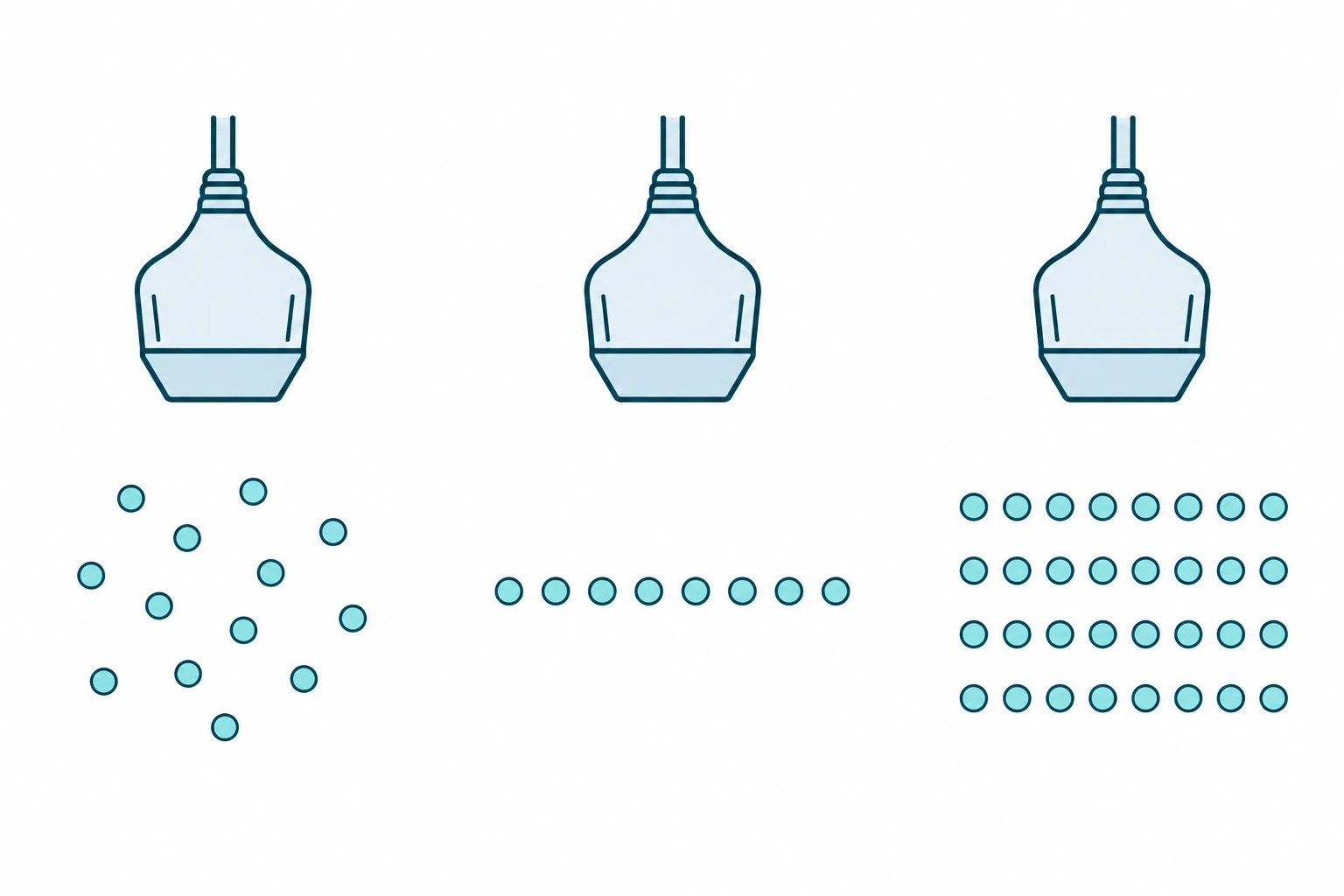
These descriptions explain how treatment points are arranged, how many lines are delivered per activation, or which path a handpiece follows. To assess efficiency, request a demonstration that states the treatment area and settings and shows the complete workflow: positioning, delivery, handpiece changes, and required pauses. That workflow is closer to the time your clinic needs to allocate for an appointment.
Compare Energy Delivery
A 2026 ultrasound review contrasts MFU-V, which uses different transducer tips for different depths, with SUPERB ultrasound, which uses a fixed depth. Ask the supplier how its proposed system sets depth and delivers energy, then match that explanation to your planned treatment areas. This gives you a concrete technical comparison when brochures use different names.
Match combined technologies to planned services
Combining RF, EMS, or other functions in one console gives you additional uses, operating steps, and accessories to review. Ask for a demonstration built around your service menu: which handpiece performs each task, where the operator needs to switch, and what the team must learn. Allocate the budget against that plan, with a clear intended use for each added function.
How to choose or upgrade HIFU equipment for your clinic
A specific purchase brief gets you a more useful recommendation than asking only whether a supplier has 25D. For example: “We mainly offer facial treatments and want to replace our current machine. Full treatment time and comfort are our priorities; we are not planning body services yet.” The supplier can explain a configuration against that task, and you have a consistent basis for comparison.
- First purchase: define the initial service menu, available space, and budget, then request the complete configuration needed for those services.
- Replacement: identify the two or three things you most want to improve and compare candidate equipment under matching application conditions.
- More facial or body services: check the relevant handpieces, depths, and instructions, and include the required training in your purchase plan.
- Additional technologies: establish which services will use RF, EMS, or other functions and how your team plans to operate them before comparing combination platforms.
This guide focuses on professional aesthetic equipment. Home-use products and HIFU for other medical purposes require separate comparisons based on their intended uses. For clinic procurement, check professional-use requirements, indications, and documentation for your market, then explore FotroHIFU’s professional HIFU machine range to compare candidate models.
Prioritize Current Needs
Our advice is to separate what you need now from what you can add later. For facial services, prioritize the required cartridges, consumables, and operator training; assess body handpieces when those services enter your plans. For an upgrade, identify what needs improving in your current setup, then check whether the proposed configuration addresses it.
Finally, request a written quotation covering standard and optional accessories, consumable terms, training, warranty, and service arrangements. You can then compare the complete equipment package your clinic will receive and use.
Frequently asked questions
Are 7D or 12D HIFU machines the same across manufacturers?
Each manufacturer uses its own naming approach. Machines sharing a 7D or 12D label can differ in technology, handpieces, cartridge depths, and delivery modes. Compare the specific brand, model, and configuration list.
What additional technologies does 25D HIFU offer compared with 7D?
For the FotroHIFU products in this guide, UltraLift 7D Pro uses micro and macro focused ultrasound, while UltraLift 25D combines HIFU, RF, and EMS. The value of those additional technologies follows from the services your clinic plans to offer. Same-name products from other manufacturers need a separate specification check.
Do more combined technologies produce better treatment results?
Assess results through evidence for the specific device, treatment area, and protocol. Combined technologies add functions to evaluate and operating methods for the team to learn. Define the treatment goal you want to improve and look for evidence relevant to that goal.
When is it worth upgrading an existing HIFU machine?
There is a concrete upgrade reason when your current configuration cannot meet a defined service need and a candidate machine offers the corresponding depths, handpieces, or workflow. Assess a complete operating demonstration, outcome evidence, and the full purchase cost together.
How is MFU-V different from other HIFU systems?
MFU-V is microfocused ultrasound with ultrasound visualization. Visualization provides images of relevant tissue layers. Check the specific imaging capabilities, supported handpieces, and how operator training incorporates that information.
Turn “I want the latest” into a clear purchase brief
SD, 4D, 7D, 12D, 22D, and 25D each lead to specific product configurations. Once you understand the names, ask about the technology, the treatment task you want to improve, and the evidence supporting that improvement. A worthwhile upgrade should have a defined role in your planned services and daily operation.
Tell FotroHIFU which equipment you currently use, which services you plan to offer, and what you most want to improve when requesting a tailored quotation. Those details bring the model comparison back to your purchase needs.